Guide
Underkeep is a party-based dungeon crawler: choose four adventurers, explore on a grid and fight in turns. This guide covers the systems confirmed by the developer and release reporting, with practical ways to approach your first expedition.
Assemble a party that covers different jobs
A four-hero party has to deal damage and survive across multiple encounters. For a simple starting point, release coverage suggests a Warrior, Thief, Wizard and Voidcaller: a durable frontliner, a second physical attacker, a damage caster and a healer. This is a suggested composition, not a requirement; try another combination if its abilities appeal to you. See party building for positions and alternatives.
Think before spending stamina and mana
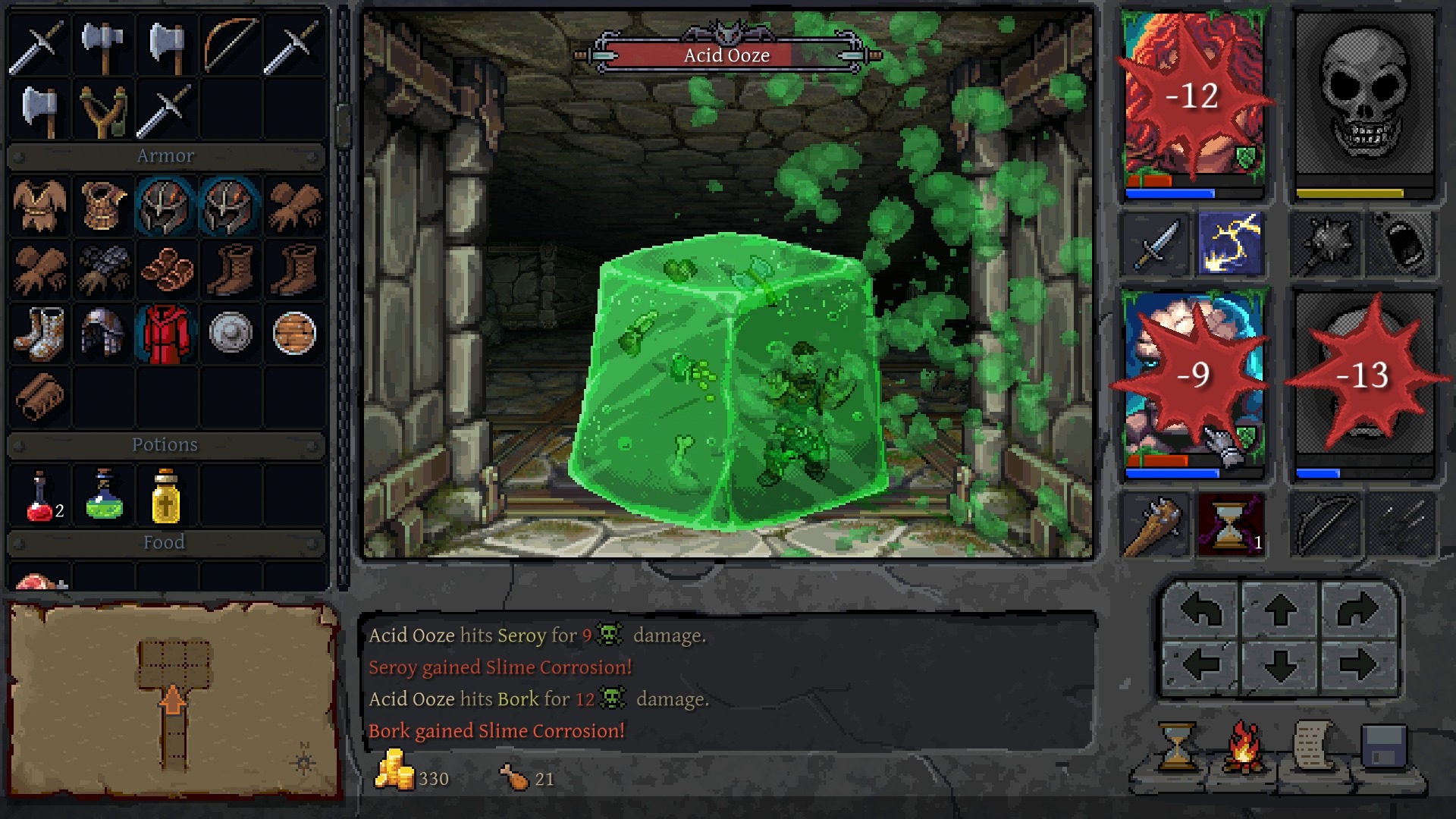
Combat is turn-based, and the developer specifically highlights space, stamina and mana as tactical considerations. Check the available actions and their costs before committing. If an encounter is manageable without using every resource, keeping some in reserve can give you more options later. Read the actual skill descriptions in your current version rather than assuming an old demo value still applies.
Rest and food: keep supplies for recovery
The early-access 1.0 playthrough by RonEmpire describes the in-game tutorial as using shared food for resting; resting restores the party's health, stamina and mana. Earlier demo comments from the developer also describe a food-and-rest loop. Check your current supplies before resting so you can plan recovery on a longer trip. These sources cover an early-access release build and an earlier demo, so check your current in-game tutorial after updates.
For the creator's How to Play chapter, see RonEmpire’s Underkeep playthrough from 5:39. The chapter time is supplied by the video creator; this guide does not claim a precise timestamp for each mechanic.
Use your automap as a notebook
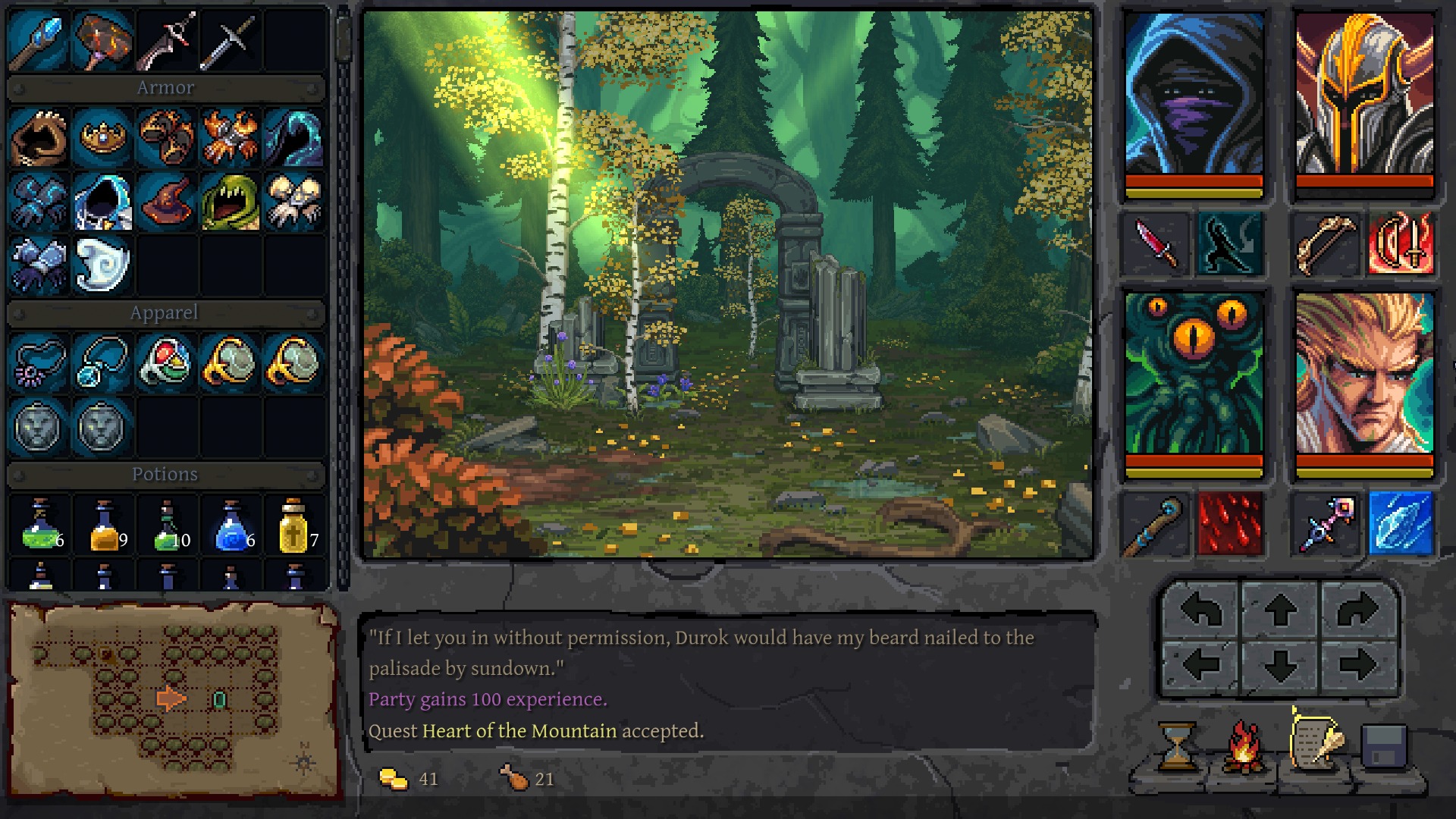
The built-in automap supports custom markers. Mark a locked door, an unusual wall or a puzzle you cannot solve yet, with a note describing what to check when you return. That gives you a useful list of leads without requiring a complete walkthrough or a map of every secret.
Explore deliberately
The official description confirms hidden passages, fake walls, optional bosses and puzzles. Inspect suspicious places, but avoid treating every wall as a confirmed secret. When a route or puzzle remains unresolved, mark it and come back with more information.
Try the demo first
The free Steam demo covers the starting area, one dungeon and a selection of classes. It is a useful way to test grid movement and combat, but it is not a complete preview of the full game. For launch details, see platforms.
For a step-by-step way to track clues and suspicious areas, see exploration and the automap.
Check reach when equipping your back row
A character in the back can contribute with ranged attacks or spells. In his class guide, Slandered Gaming also describes using a reach weapon for a melee character positioned in back. Inspect the weapon's description and test its attack range before relying on it.